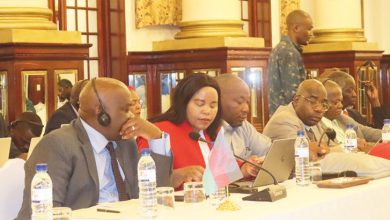
Five months into the 2026/27 financial year, the Malawi Government has directed local government authorities (LGAs) to submit cash flow requirements in a move that signals unlocking of K5 billion Constituency Development Fund (CDF) financing.
In a directive contained in an August 20 2026 letter from National Local Government Finance Committee (NLGFC) executive director Kondwani Santhe, the councils are required to submit cash flow requirements based on signed contracts or evaluated sums for CDF procurements.

The letter said the submissions should cover contracts that councils or LGAs expect to enter into between now and October 2026, while requests for other contracts will be made later when councils are ready.
Reads the communication: “The submission should be prudently done only on contracts that you envisage to enter into between now to October 2026, as for the other contract requests shall be done later when you are ready.
“The cash flow should also include any certificates due or anticipated between now to October 2026.”
The LGAs were expected to make the submissions by close of business on Friday, August 21 2026.
The fresh communication coincides with an outline by Minister of Local Government and Rural Development Ben Phiri explaining the eight stages through which CDF money moves.
The process ranges from the annual allocation and project identification to technical appraisal, procurement, contract award, advance payments, construction and payment against certified work.
Under the process, Phiri said the K5 billion annual CDF allocation per constituency is followed by communities identifying priority projects, which then undergo technical appraisal to assess feasibility, design, costs, standards and compliance.
The projects subsequently proceed to open and competitive procurement, followed by contract awards to qualified and compliant contractors.
Based on the outlined process and the NLGFC directive, the CDF programme now appears to be approaching stage six, where the government makes advance payments to kick-start project implementation and provide contractors with the cash flow needed to begin work.
Phiri said construction would then proceed according to agreed standards and specifications, with subsequent payments being made only against certified and verified work completed.
However, the move comes amid concerns from local governance and civil society stakeholders over the sustainability of the increased CDF allocation against what they describe as a constrained resource base.
But Malawi Local Government Association (Malga) executive director Hardrod Mkandawire said in an interview yesterday that on the face of it, the demand approach to local level development financing can improve efficiency, enhance public finance management and democratic accountability at the local level.
However, he said on the converse, it makes the LGAs to be more vulnerable to court suits in cases where there is extended delay of disbursement to pay contractors.
Said Mkandawire: “This approach equates LGAs to departments and agencies of the central government and not development actors in their own right, which is a sharp departure from the principle of subsidiarity, which, underpin devolution, the type of decentralisation we adopted in Malawi.
“We are of the considered view that this policy shift needed a thorough policy dialogue between the central government and the LGAs to address eventual pitfalls and bottlenecks.”
Catholic Commission for Justice and Peace (CCJP) desk officer for Karonga Diocese Cuthbert Mkandawire said government was overly ambitious in announcing increased CDF funding despite a reduced resource base.
He said: “The government must swallow a bitter pill and go back to the drawing board and reduce the allocation. Allow councils to revise their plans to meet the reduced funding against what was appropriated.
“Once a realistic and affordable figure is appropriated by Parliament in the next sitting of Parliament, let LGAs be funded quarterly without delay and ensure accountability of the funds.”
Parliament approved a combined K1.25 trillion allocation for councils in the K10.9 trillion 2026/27 National Budget, comprising K1.145 trillion for development, including the CDF and K109.3 billion for Other Recurrent Transactions (ORT).
However, The Nation reported last Thursday that only four percent of the development allocation had so far been released, compared to 56 percent of the ORT allocation.
The 56 percent ORT funding translates to K61.208 billion out of the K109.3 billion allocation, while the four percent development funding amounts to about K45.8 billion.
Centre for Social Transparency and Accountability executive director Willy Kambwandira earlier warned that continued delays in releasing CDF resources risked fuelling public speculation that government was withholding the funds because the money was simply unavailable.
In the 2026/27 financial year, CDF has effectively absorbed other development funding windows, including the District Development Fund, Water Resources Fund, Infrastructure Development Fund and Hospital Rehabilitation funds.